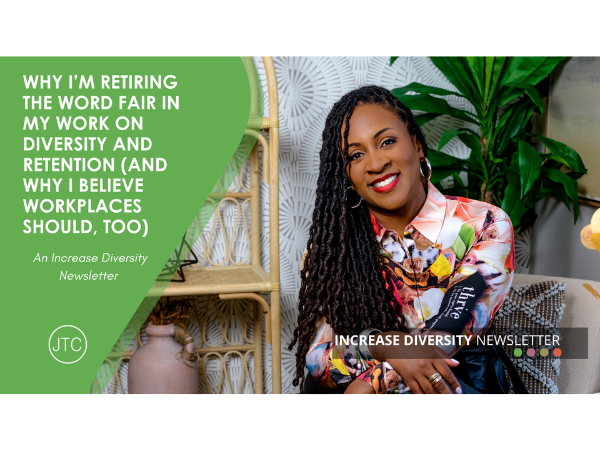
Why I’m Retiring the Word Fair in My Work on Diversity and Retention
This is #IncreaseDiversity, a weekly newsletter series + Increase Diversity Toolbox sharing best practices for employers who want to learn how to… well, increase diversity. To see previous editions, visit JenniferTardy.com. | IG: @IncreaseDiversity | Increase Diversity - YouTube
THE INCREASE DIVERSITY ACADEMY | Your Essential Academy for Increasing Diversity and Retention. CLICK HERE

At home, I hear the word fair nearly every day—from my 9- and 10-year-old sons. It’s how they process the world: what they get, what they miss, how others treat them. They sort their experiences into what’s fair and unfair, often with a plea for me to fix it.
And I’m constantly reminding them: life won’t always be fair.
But at work? I’ve learned we don’t need reminders; we need repair.
That’s why I’m retiring the word fair from my professional vocabulary. Because in my work helping organizations increase diversity and retention without causing harm, I’ve seen how fair and unfair quietly miss the mark. And in some cases, they can do more harm than good.
Fair Sounds Righteous (But Lands Whiny)
Let’s be honest: “That’s not fair” doesn’t always land with power. It can sound emotional. Whiny. Like a moral complaint rather than a systemic concern. Especially in professional settings, the word tends to provoke eye rolls, defensiveness, or dismissal.
Even when the issue is real.
Because fair is emotionally loaded. It tugs at personal perception, which means it invites personal resistance. Before the conversation even begins, it’s already about feelings, not facts.
And when you’re trying to lead change, that kind of language gets in the way.
Fair is Subjective; Equity is Strategic
What’s fair to one person may feel unfair to another. The term is too fluid. Too personal. And in diversity work, personal interpretations don’t move systems.
But equity does.
Equity zooms out. It asks: What structures are creating these outcomes? It names the design flaws. It identifies who’s impacted—and how. It invites action, not just empathy.
Fairness asks: Do I feel seen?
Equity asks: Is this system built to see me?
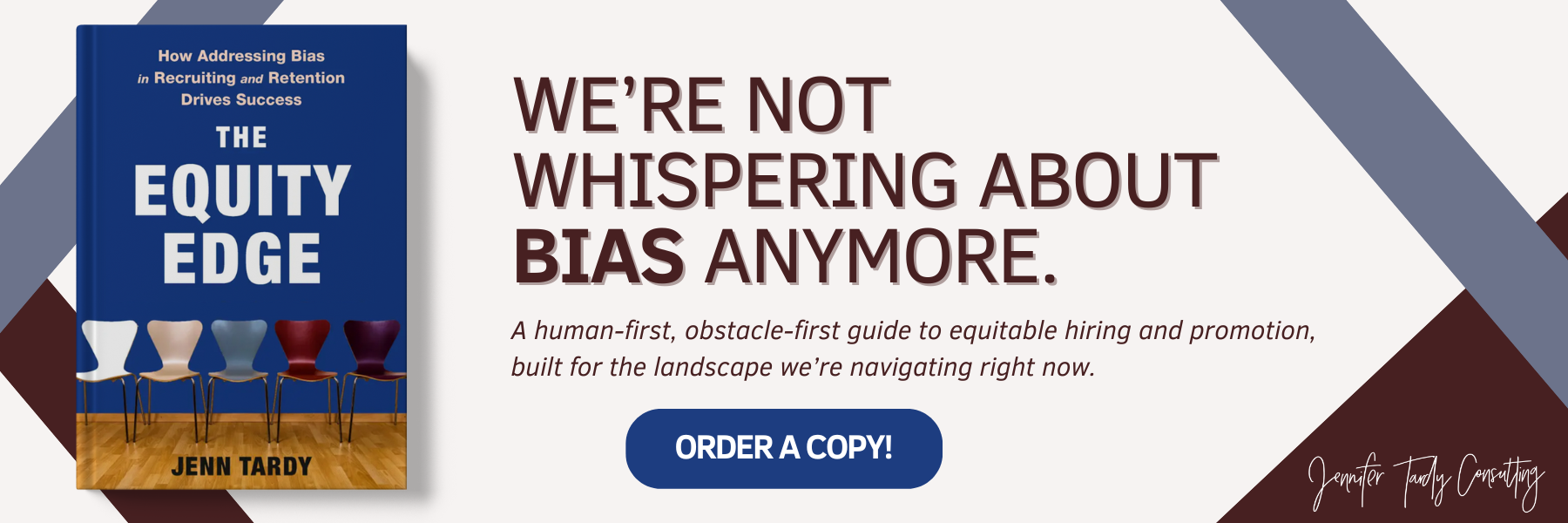
This is something I unpack more deeply in The Equity Edge—how language can either invite people into equity work or quietly push them out.
Unfair Highlights Harm, But Blurs the Cause
Calling something unfair may stir emotion, but rarely sparks strategy. It can even keep us spinning on what I call the “guilt-and-resistance hamster wheel.” We get caught in debates about intentions, morality, and perception—while the structural issues stay untouched.
I’ve worked with clients who proudly pointed to their “fair” hiring practices and representative teams until we sliced the data and saw something stark: most of their marginalized employees were clustered in customer service roles, far from leadership or decision-making influence.
That wasn’t equity. That wasn’t inclusive design. But under the label of fair, it went unnoticed.
That’s why I ask a better question: Where is bias showing up in your systems—and how can we design it out?
Bias and Equity Reveal What Fair Hides
Here’s why this shift matters: most people can agree on what is and isn’t bias. Very few people agree on what is or isn’t fair. That’s where the conversation collapses—or worse, gets hijacked.
When someone says, “That’s not fair,” I now ask:
“What feels biased about this?”
or
“What would an equitable approach look like here?”
These questions shift us from emotion to examination. From reaction to redesign. They keep the conversation open, grounded, and focused on change.
So What Are We Really Saying When We Say “Unfair”?
Often, when we label something unfair, we’re not just describing a broken policy—we’re revealing a deeper pain.
We’re saying:
I feel overlooked.
I feel dismissed.
I feel harmed.
And that’s valid. But if we want to move from pain to progress, we need sharper language. Bias gives us a root cause. Equity gives us a roadmap. And together, they help us honor the emotion—and build solutions.
This Isn’t a Language Preference—It’s a Strategic Shift
In today’s cultural and political landscape, words matter more than ever. And when we use words like fair and unfair, we often speak to emotions. But when we use words like bias and equity, we speak to systems.
That’s how we move the mass.
That’s how we lead without leaving people behind.
That’s how we get off the hamster wheel.
Because this work isn’t about being right. It’s about being effective. And if my sons are growing up in a world where fairness can’t always be guaranteed, I want to make sure they’re at least walking into workplaces where equity can be expected.
It’s a core principle I explore in The Equity Edge: equity doesn’t give an advantage to the individual—it gives one to the workplace that hires them.
Let’s build that—together.